

The short answer: Low-E replacement windows are usually the better long-term solution for Houston homes, while window tint can be a useful short-term fix for glare or a specific sunny room. Tint can reduce light and some heat through existing glass. Low-E windows are built to improve the whole window system: glass, insulated air space, frame, seal, warranty, and energy performance.
That difference matters. A film applied to old glass cannot turn a failing single-pane or fogged double-pane window into a modern, sealed, ENERGY STAR-certified replacement window. It may help with glare, but it does not replace a complete window upgrade.
This post is part of our Low-E window series. Start with how Low-E double pane windows work in Houston heat, then compare double pane windows without Low-E and the SHGC and U-factor ratings Houston homeowners should know.
The Difference
Low-E Glass and Window Tint Are Not the Same Thing
Low-E glass is part of the window's insulated glass package. It uses a microscopic coating designed to reflect infrared heat. In a double pane replacement window, that coating works with the sealed air or gas space, spacer, frame, and weatherstripping.
Window tint is usually a film applied to existing glass. Depending on the film, it may reduce glare, visible light, UV exposure, and some solar heat. It can be professionally installed or purchased as a do-it-yourself product.
The Department of Energy notes that some window films have low-e coatings and can be effective at reducing near-infrared solar radiation. That does not mean every tint film performs like a full replacement window, and it does not mean film fixes frame failure, seal failure, or air leakage.
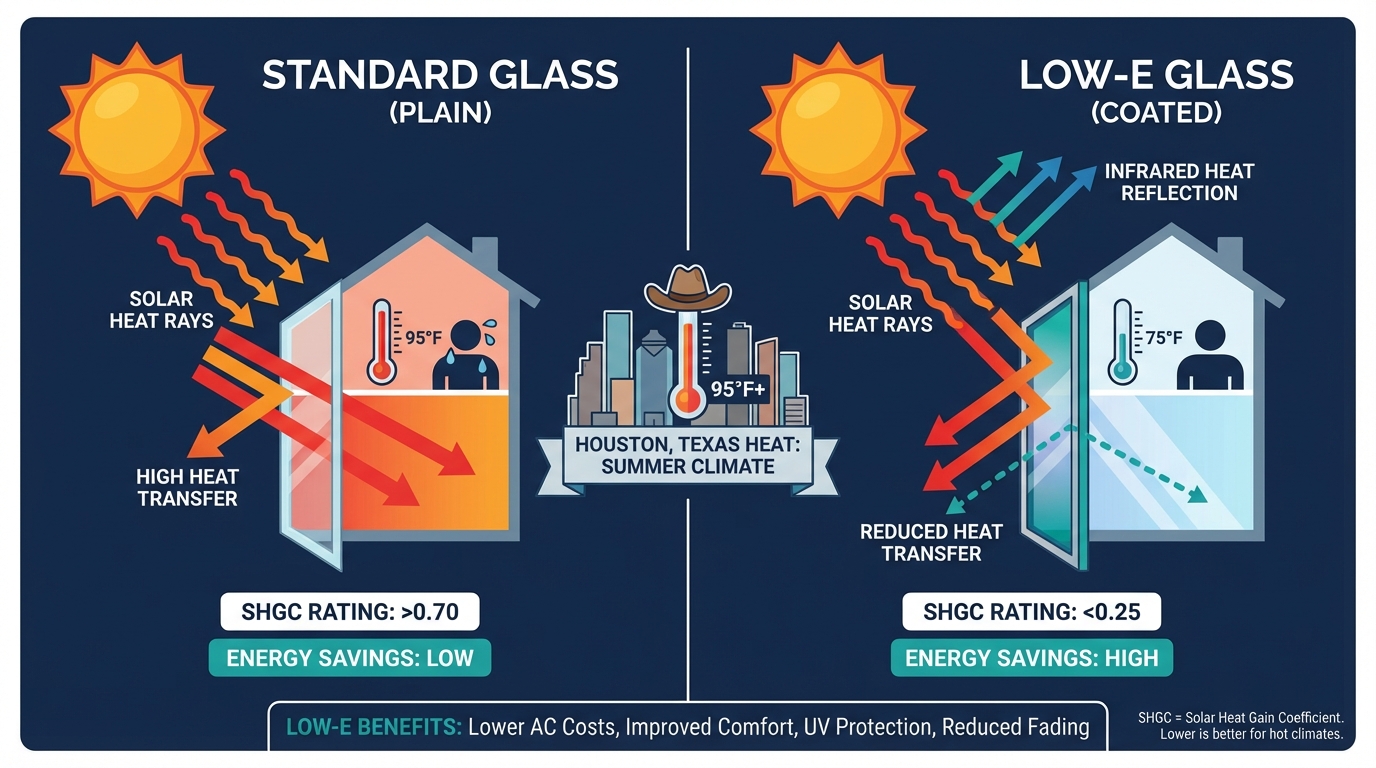
The practical comparison is this:
| Option | What It Changes | What It Does Not Fix |
|---|---|---|
| Window tint | Glare, visible light, UV, some solar heat | Old frames, broken seals, drafts, fogged glass, poor operation |
| Low-E replacement windows | Glass package, frame, seal, operation, warranty, energy ratings | Shading, landscaping, attic heat, duct problems |
Houston Heat
Why Houston Homes Need More Than Darker Glass
Houston heat problems are not only about brightness. They are also about solar heat gain, hot glass surfaces, air leaks, humidity, and old frames that no longer seal well.
Tint can make a room darker, which may make it feel better immediately. But darker is not always the same as better performance. A room can be less bright and still uncomfortable if the window is leaky, the insulated glass unit has failed, or the frame is transferring heat.
Low-E replacement windows are different because the performance is designed into the whole unit. The right package can reduce solar heat gain while still preserving useful daylight.
The ENERGY STAR residential windows guide describes certified window coatings as helping keep out summer heat without noticeably reducing visible light. That is the goal for many Houston homeowners: less heat without turning the house into a cave.
When Tint Helps
When Window Tint Can Make Sense
Window tint can be useful in the right situation.
It may make sense when:
- Your windows are relatively new
- The frames are in good condition
- There is no fogging between panes
- The windows open, close, and lock properly
- The main problem is glare
- You only need help in one or two rooms
- You are not ready for full replacement yet
For example, a home office with one west-facing window may benefit from a glare-reducing film if the window itself is otherwise sound. A media room may need less visible light more than it needs a whole-house window project.
Tint can also be a bridge solution. If you know the windows will be replaced later but need relief now, film may help in the meantime.
But it should be treated as an attachment to the existing window, not as a replacement for the window itself.
When Replacement Wins
When Low-E Replacement Windows Are the Better Choice
Low-E replacement windows usually make more sense when the current windows are part of a larger performance problem.
Replacement is usually the better path when:
- The glass is fogged between panes
- The windows leak air or water
- The frames are warped, soft, corroded, or failing
- The locks or balances no longer work
- The room feels hot near the glass even with blinds closed
- Multiple rooms have the same comfort problem
- You are comparing long-term home value, warranty, and durability
- You want ENERGY STAR-certified performance
If the window is failing mechanically, tint only covers the glass. It does not rebuild the frame, reseal the insulated glass unit, or improve operation.
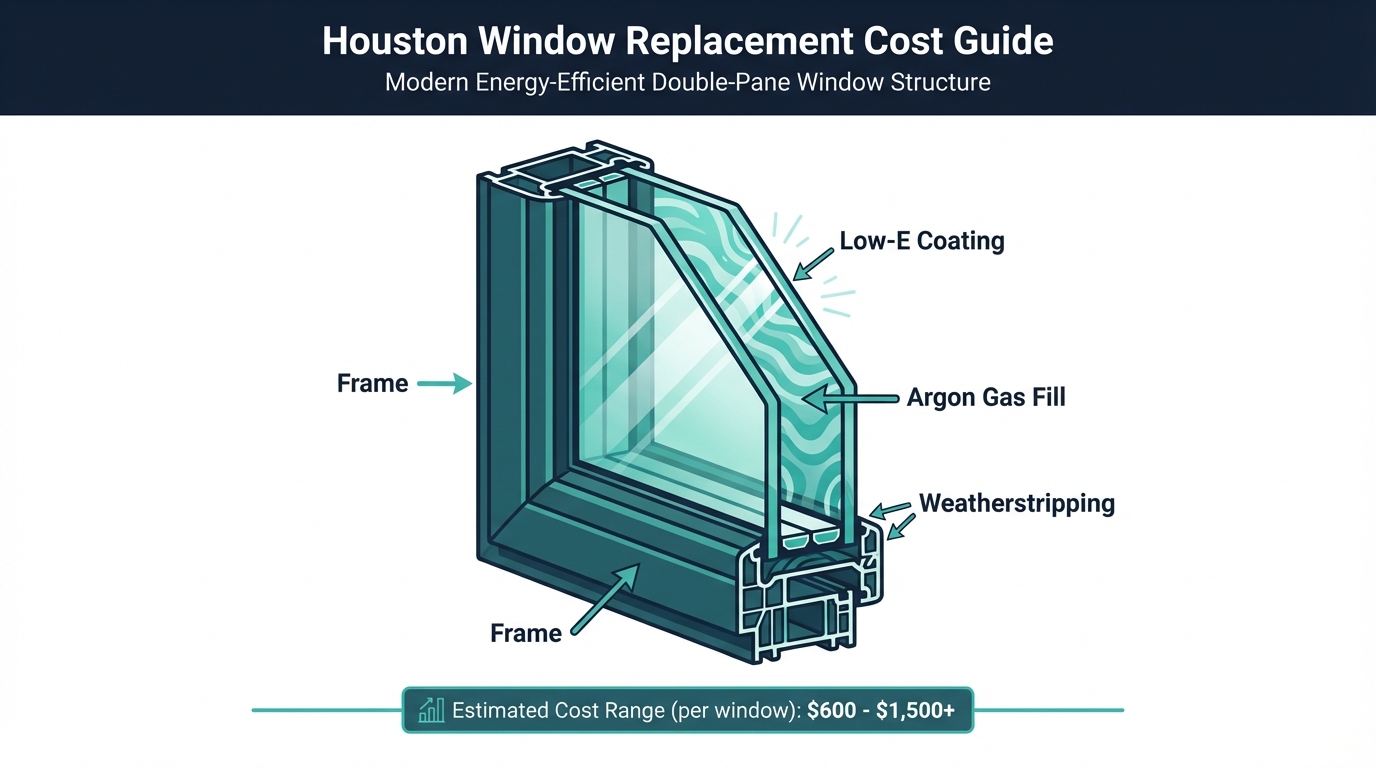
The Department of Energy says low-emissivity coatings control heat transfer within insulated glazing and can reduce energy loss compared with regular windows. For Houston, the most important part is choosing a package that reduces heat gain, not just any Low-E coating.
Warranty
Warranty and Glass Failure Matter More Than People Think
Before applying tint to existing windows, homeowners should check their window warranty. Some manufacturers limit or exclude coverage if aftermarket film is applied to the glass.
That is not a small detail. If an insulated glass unit fails later, the warranty conversation can get messy.
Low-E replacement windows avoid that issue because the coating and glass package are part of the manufactured unit. The window is sold, rated, and warrantied as a system.
Ask these questions before choosing tint:
- Does the current window manufacturer allow aftermarket film?
- Will film affect insulated glass warranty coverage?
- Is the existing glass already fogged or failed?
- Is the frame still square and sealed?
- Is the goal glare control or full comfort improvement?
Ratings
How to Compare Performance: SHGC, U-Factor, and Visible Light
The best way to compare options is to look at ratings, not adjectives.
For replacement windows, ask for the NFRC ratings:
- SHGC for solar heat gain
- U-factor for insulation
- Visible Transmittance for daylight
- Air Leakage for drafts
- Condensation Resistance when relevant
For tint, ask for the film's solar performance data:
- Solar heat reduction
- Visible light transmission
- UV rejection
- Interior reflectivity
- Compatibility with insulated glass
- Warranty terms
The key metric for Houston comfort is usually SHGC. A lower SHGC means less solar heat enters the home. That is why our window ratings guide for Houston homeowners focuses on SHGC before U-factor.
Do not compare a vague tint claim against a vague window claim. Compare real specs.
Cost
Is Tint Cheaper Than Low-E Windows?
Usually, yes. Tint is normally cheaper upfront than replacing windows.
But cheaper upfront does not always mean better value. The right comparison is the problem you are trying to solve.
If the problem is glare in one room, tint may be the practical choice. If the problem is old windows throughout the home, failed seals, drafts, hot glass, weak locks, and poor comfort, tint is only addressing one symptom.
Replacement windows cost more because they include more:
- New frame
- New insulated glass unit
- Low-E coating
- Fresh weatherstripping
- Improved operation
- Installation labor
- Warranty coverage
- Better curb appeal
- Potential energy and comfort improvement
For budget planning, see our guide to window replacement cost in Houston.
Decision Guide
Low-E Windows vs Tint: Which Should You Choose?
Use this simple decision guide.
Choose window tint when:
- The window is in good condition
- The issue is mostly glare
- You need a lower-cost short-term fix
- You only want to improve one room
- You understand the warranty implications
Choose Low-E replacement windows when:
- The windows are old or failing
- Multiple rooms are uncomfortable
- You want better whole-home performance
- You care about warranty and resale value
- You want ENERGY STAR-certified windows
- You want a cleaner long-term solution
For most Houston homes with older builder-grade or aluminum windows, Low-E replacement is the better long-term answer. For newer windows with one specific glare problem, tint can be reasonable.
Frequently Asked Questions
Q.Is window tint the same as Low-E glass?
No. Window tint is usually a film applied to existing glass. Low-E glass is part of the window's manufactured glass package. Some films may have low-e properties, but tint does not replace a full insulated replacement window.
Q.Does window tint reduce heat in Houston?
It can. Tint can reduce glare, visible light, UV exposure, and some solar heat. The result depends on the film, the existing glass, the direction the window faces, and whether the window itself is in good condition.
Q.Are Low-E windows better than tint?
Low-E replacement windows are usually better for whole-home comfort, long-term value, warranty coverage, and energy performance. Tint may be better for a lower-cost glare fix when the existing windows are still in good condition.
Q.Can I put tint on double pane windows?
Sometimes, but you should check the window manufacturer's warranty and the film manufacturer's compatibility guidance first. Some aftermarket films can affect insulated glass warranty coverage.
Q.Will Low-E windows make my house dark?
Not usually. Good Low-E glass is designed to reduce infrared heat while preserving usable daylight. Tint often darkens a room more noticeably because reducing visible light is part of how many films control glare.
Q.Should I tint old single-pane windows or replace them?
If the windows are old, drafty, hard to operate, or part of a whole-home comfort problem, replacement is usually the smarter long-term move. Tint can help with glare, but it does not fix the weaknesses of old single-pane windows.
Q.What should I ask before choosing tint or replacement?
Ask whether the current windows are structurally sound, whether the glass seals have failed, what the warranty allows, what SHGC or solar performance numbers apply, and whether the goal is glare control or full comfort improvement.
Get Help Choosing the Right Heat-Control Option
If you are deciding between tint and replacement windows, start with the condition of the window. If the frame, seal, lock, or glass unit is failing, replacement usually makes more sense.
Allwin installs Low-E replacement windows across Houston, Katy, Sugar Land, The Woodlands, Cypress, Spring, Pearland, Richmond, and the surrounding area.
Call (713) 636-5145 for a free in-home quote. We will look at the room, the glass, the frame condition, and the sun exposure before recommending a window package.


