

The short version: Low-E double pane windows work by slowing heat in two different ways. The two panes of glass create an insulated air space, and the Low-E coating reflects infrared heat before it turns your living room into an oven.
For Houston homeowners, that second part matters a lot. A basic double pane window can reduce conductive heat transfer, but it can still let too much solar heat through the glass. Low-E glass is what helps block the radiant heat you feel on west-facing rooms, upstairs bedrooms, breakfast areas, and big living room windows in the afternoon.
The Basics
What Is a Double Pane Window?
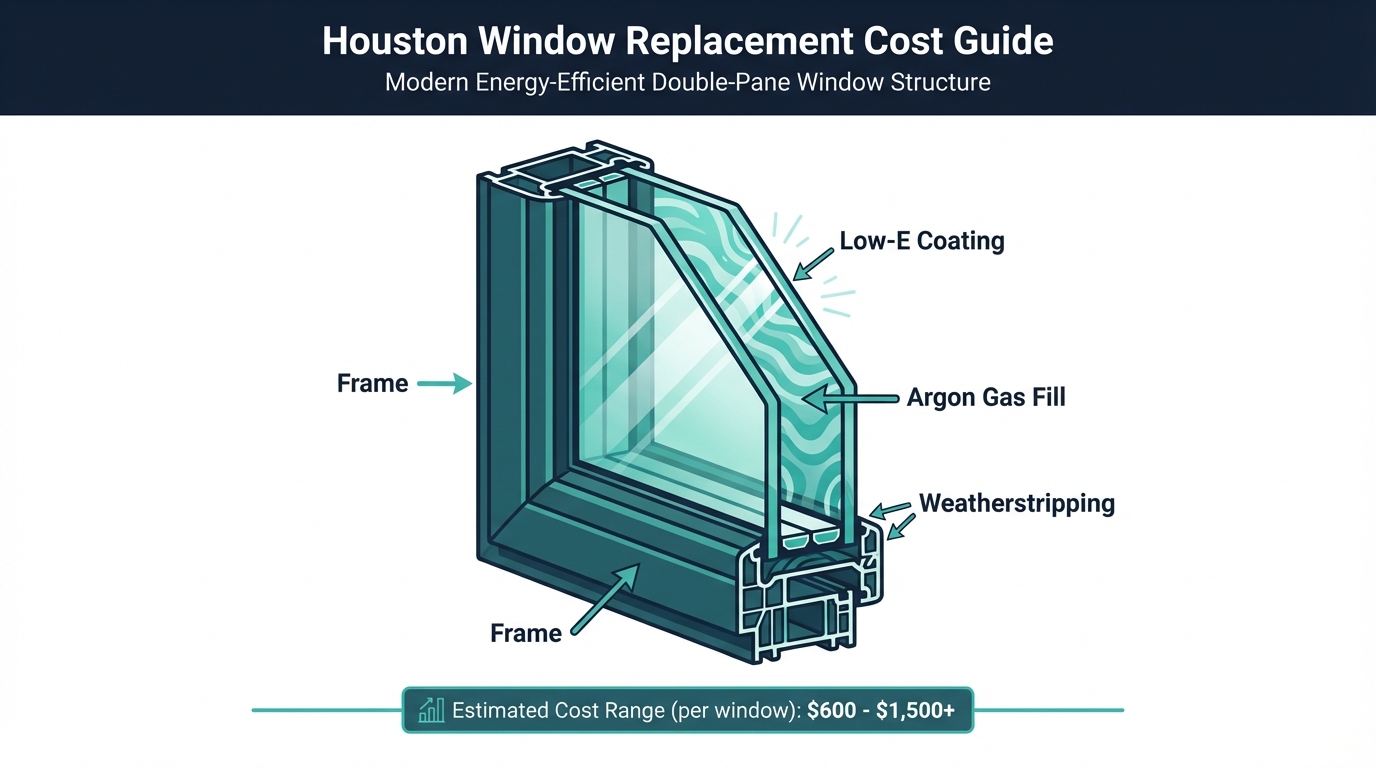
A double pane window is also called an insulated glass unit, or IGU. Instead of one sheet of glass, the window has two panes separated by a spacer and sealed around the edge. The space between the panes is usually filled with air or an insulating gas such as argon.
That sealed space is the key. Heat moves easily through single-pane glass. With two panes and an insulated gap, the window slows heat transfer through the glass package.
In plain English:
- Single-pane glass is one thin barrier between your home and Houston weather
- Double-pane glass adds a second barrier and an insulated space
- Argon fill can improve the insulating performance of that space
- Better spacers and seals help the glass unit last longer
Double pane windows are a major upgrade over old single-pane windows. But in Houston, double pane by itself is not the whole story.
The Coating
What Does Low-E Mean?
Low-E stands for low emissivity. It sounds technical, but the idea is simple: the glass has a very thin coating designed to reflect radiant heat.
The coating is so thin you usually cannot see it. It is applied to one of the glass surfaces inside the sealed unit, where it is protected from cleaning, weather, and fingerprints. Its job is to reflect infrared energy while still allowing daylight through.
That matters because sunlight is not just visible light. It also carries infrared heat and ultraviolet light. In a Houston home, the heat portion is what makes the room feel hot even when the AC is running.
Houston Heat
Why Low-E Matters So Much in Houston
Houston homes fight heat for most of the year. The problem is not only the outdoor temperature. It is also direct sun hitting glass for hours at a time.
This is where a plain double pane window can disappoint. It may insulate better than single-pane glass, but if the glass package has no Low-E coating, it can still allow too much solar heat gain.
You usually feel the difference in places like:
- West-facing bedrooms that heat up after lunch
- Two-story rooms with tall windows
- Breakfast rooms with morning sun
- Home offices where one side of the room feels hot
- Older Houston homes with aluminum or builder-grade windows
If the glass gets hot and radiates that heat into the room, the AC has to keep fighting. The thermostat may say the house is 74 degrees, but the room still feels uncomfortable because the window surface is warm and the sun is pouring through.
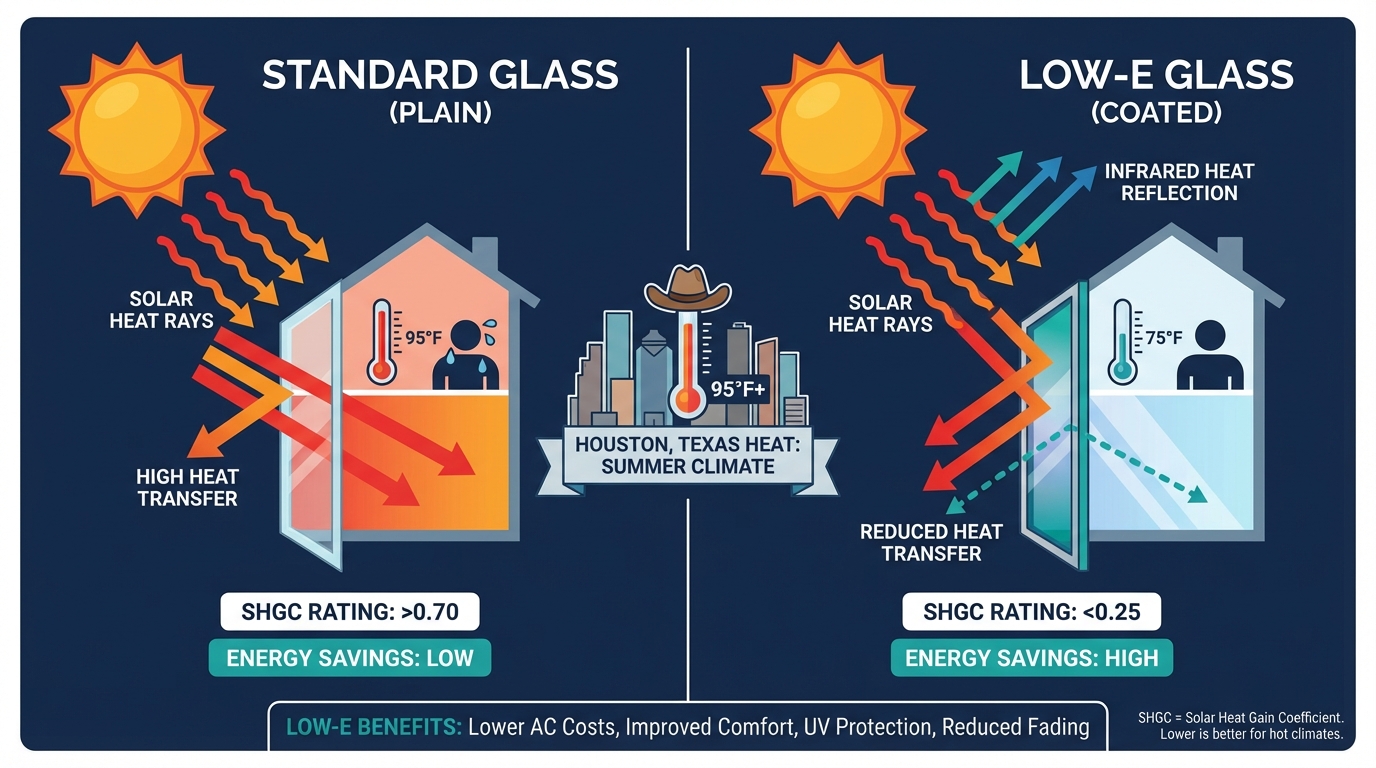
That is why we treat Low-E as a standard feature for Houston replacement windows, not a luxury add-on.
The Numbers
The Ratings That Tell You If a Window Will Perform
When comparing replacement windows, do not rely only on phrases like "energy efficient" or "double pane." Look for the NFRC ratings on the window label.
The two numbers Houston homeowners should understand are:
U-factor measures how well the window slows heat transfer. Lower is better. This matters for overall insulation.
Solar Heat Gain Coefficient, or SHGC, measures how much solar heat gets through the window. Lower is better for Houston.
For the Houston area, SHGC is especially important because solar heat gain is one of the biggest comfort problems. A window can be double pane and still have a poor SHGC if it does not have the right Low-E glass package.
That is the trap: homeowners hear "double pane" and assume they are getting the best energy performance. Sometimes they are only getting a basic insulated unit.
The most useful official sources are ENERGY STAR's window certification guide and the NFRC window label. ENERGY STAR confirms that windows must meet U-factor and, where applicable, SHGC requirements by climate zone. NFRC labels give you the tested ratings that let you compare one quote against another.
If you want the broader product-selection view, we cover the full Houston climate package in our guide to the best replacement windows for Houston heat and humidity.
Double Pane vs Low-E
Is Double Pane Without Low-E Good Enough?
Sometimes, but not usually for a Houston replacement project.
Clear double pane glass is better than single pane glass because the insulated space helps slow direct heat transfer. But it does much less to control radiant solar heat. That means a room can still feel hot when the sun hits the window.
| Window Type | What It Helps With | Houston Weak Spot |
|---|---|---|
| Single pane clear glass | Lowest upfront cost | Poor insulation, high heat transfer, little comfort improvement |
| Double pane clear glass | Better insulation than single pane | Still allows too much solar heat through the glass |
| Double pane Low-E glass | Insulation plus radiant heat control | Costs more upfront, but is usually the better Houston value |
Low-E double pane gives you both layers of protection:
- The double pane unit slows conductive heat transfer
- The Low-E coating reflects infrared heat
- The sealed glass unit helps reduce drafts and temperature swings
- The room stays more comfortable without relying only on the AC
If your goal is simply to replace broken glass, clear double pane might solve the immediate issue. If your goal is lower heat gain, better comfort, and a window package that makes sense for Houston, Low-E is the smarter baseline.
Where It Matters Most
When Low-E Matters Most in a Houston Home
Low-E glass is useful across the whole house, but it matters most where the sun is driving the comfort problem.
You should prioritize Low-E double pane windows when you have:
- West-facing rooms that heat up in the afternoon
- Upstairs bedrooms that never cool evenly
- Large picture windows or tall living room glass
- Home offices where glare and heat build during the workday
- Faded flooring, rugs, furniture, or window treatments
- Glass that feels hot from several feet away
- AC run times that spike on sunny days more than cloudy days
That last point is important. If a room feels dramatically better on cloudy days, the issue may not only be insulation or ductwork. It may be solar heat gain through the glass.
Real-World Comfort
How Low-E Windows Change the Way a Room Feels
The biggest benefit is not always the utility bill. It is comfort.
Homeowners often call us because one room never feels right. They blame the AC, the ductwork, or the thermostat. Sometimes those are part of the problem. But very often, the windows are adding heat faster than the system can remove it.
Low-E double pane windows can help with:
- Hot glass surfaces near seating areas
- Afternoon heat in west-facing rooms
- Furniture and flooring fading from UV exposure
- AC run time during long summer days
- Rooms that feel different from the rest of the house
They will not fix every comfort problem. Insulation, ductwork, shade, attic ventilation, and air sealing all matter. But windows are one of the first places to check when the discomfort is strongest near the glass.
If you are not sure whether your windows are the issue, compare your home against our list of 7 signs you need new windows in Houston.
What to Ask
What to Ask Before You Buy Replacement Windows
Before approving a window quote, ask for the actual glass package details. You want more than a generic "energy efficient" promise.
This also makes pricing easier to understand. Two quotes can both say "double pane windows" and be hundreds or thousands of dollars apart because the glass package, frame, spacer, warranty, and installation scope are not the same. For the bigger pricing picture, see our guide to window replacement cost in Houston.
Ask:
- Is this window double pane?
- Does it include Low-E glass?
- What is the SHGC?
- What is the U-factor?
- Is the product ENERGY STAR certified for our climate zone?
- What warranty covers the insulated glass unit?
- Who handles warranty service if a seal fails?
If a quote cannot answer those questions clearly, it is hard to compare it against another quote.
At Allwin, we would rather explain the specs before you buy than have you discover later that your new windows are not solving the heat problem you cared about in the first place.
Frequently Asked Questions
Q.What is a Low-E double pane window?
A Low-E double pane window has two panes of glass with a sealed insulating space between them, plus a microscopic coating that reflects infrared heat. The double pane unit slows heat transfer, while the Low-E coating helps block solar heat gain.
Q.Are Low-E windows worth it in Houston?
Yes. Houston homes deal with long cooling seasons, strong sun, and warm glass surfaces. Low-E glass helps reduce radiant heat coming through the window, which can improve comfort and reduce AC load compared with clear glass.
Q.Is double pane glass enough without Low-E?
Double pane glass is better than single pane glass, but without Low-E it may still allow too much solar heat into the home. In Houston, double pane without Low-E is usually not the best value if your goal is energy performance and comfort.
Q.Does Low-E glass make rooms dark?
Not when it is specified correctly. Low-E coatings are designed to reduce infrared heat while still allowing visible light through. The room should feel cooler without feeling heavily tinted or dark.
Q.What rating matters most for Houston windows?
SHGC is one of the most important ratings for Houston because it measures how much solar heat passes through the glass. U-factor matters too, but SHGC is the number that tells you how well the window controls sun-driven heat gain.
Q.How do I know if my current windows have Low-E glass?
Check the original window paperwork or look for an NFRC label if the windows are newer. If the windows are older and the room gets hot near the glass, a free in-home quote can confirm whether the current glass package is likely underperforming.
Q.What Low-E window specs should I ask for in Houston?
Ask whether the window is ENERGY STAR certified for the Southern climate zone, whether the NFRC label shows the U-factor and SHGC, and whether the glass package includes double-pane Low-E insulated glass. For Houston, a lower SHGC is especially important because it tells you the window is controlling solar heat gain.
Get a Houston Window Quote That Explains the Specs
If you are comparing window quotes, make sure you know what glass package you are actually buying.
Allwin installs energy-efficient replacement windows across Houston, Katy, Sugar Land, The Woodlands, Cypress, Spring, Pearland, Richmond, and the surrounding area.
Call (713) 636-5145 for a free in-home quote. We will walk through the window specs, explain the Low-E options, and tell you plainly what makes sense for your home.


