

The short answer: if one room in your Houston home stays hot even when the AC is running, the windows may be letting in more solar heat than the system can remove. This is especially common in west-facing rooms, upstairs bedrooms, home offices, and spaces with large glass areas.
The thermostat can say 74 degrees while the room still feels uncomfortable. That happens because comfort is not only air temperature. It is also radiant heat from hot glass, sunlight hitting surfaces, air leaks, humidity, and how evenly the room mixes conditioned air.
This post is part of our Low-E window series. If you want the glass-package basics, start with how Low-E double pane windows work in Houston heat. If you are comparing window quotes, read why double pane windows without Low-E fall short in Houston.
The Comfort Problem
Why a Room Can Feel Hot Even When the Thermostat Looks Fine
Your thermostat measures air temperature near the thermostat. It does not measure how the room feels near a hot window.
A sunny room can feel warmer because the glass and nearby surfaces absorb solar energy. The window warms up. The floor warms up. The furniture warms up. Then those surfaces radiate heat back into the room and toward your body.
That is why two rooms can have the same air temperature but feel very different.
In Houston, this usually shows up as:
- One bedroom that never cools like the rest of the house
- A home office that gets hot by mid-afternoon
- A living room that feels fine in the morning and uncomfortable later
- A breakfast room that gets bright but too warm
- An upstairs room that stays several degrees warmer
- Curtains that stay closed because opening them makes the room miserable
If the discomfort follows the sun, the windows are probably part of the problem.

Solar Heat
Solar Heat Gain Is the Big Window Problem in Houston
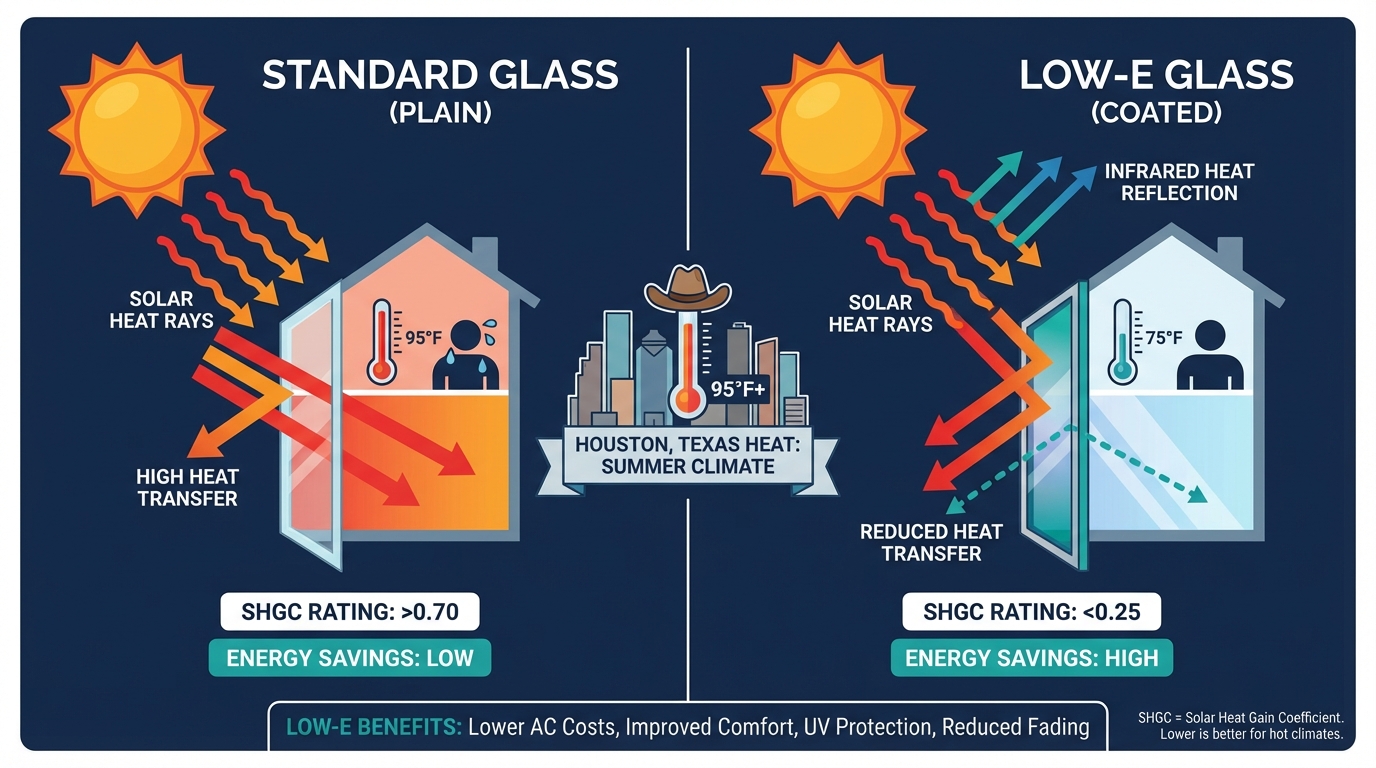
Solar heat gain is heat from sunlight entering through the window. It can come directly through the glass or be absorbed by the window and released inside.
The U.S. Department of Energy explains that Solar Heat Gain Coefficient, or SHGC, measures how much solar radiation is admitted through a window, and that lower SHGC values reduce cooling loads during summer by blocking heat gain from the sun. For Houston, that is the rating homeowners should care about.
ENERGY STAR makes the comfort point in plain language too: some rooms can feel like a sauna in summer, and certified windows reduce heat gain more than typical windows while still allowing visible light.
Sources: DOE window energy performance ratings, ENERGY STAR residential windows.
Window Clues
Signs Your Windows Are Driving the Hot-Room Problem
Not every comfort problem is a window problem. But windows should be high on the list when the symptoms are concentrated near glass.
Look for:
- The room feels hotter on sunny days than cloudy days
- The room gets worse when the sun hits that side of the house
- The glass feels hot from several feet away
- Closing curtains helps, but makes the room dark
- The AC runs longer in the afternoon
- Furniture, rugs, or flooring fade near the window
- You feel a temperature difference when walking near the window
- The room has older clear glass, aluminum frames, or failed seals
Those clues point to solar heat gain, radiant heat, air leakage, or a failing insulated glass unit.
If you see fog or condensation between panes, that is a different but related issue. Our guide to 7 signs you need new windows in Houston covers failed seals, drafts, and other warning signs.
AC Limits
Why Turning Down the AC Does Not Always Fix It
Lowering the thermostat can help temporarily, but it is often the expensive workaround.
If a room is gaining heat through the windows all afternoon, the AC has to remove that heat again and again. The system may cool the central hallway, but the hot room keeps absorbing sun.
That can create a frustrating cycle:
- One room gets hot
- You lower the thermostat
- The rest of the house gets too cold
- The hot room still feels warm near the glass
- The AC runs longer than it should
This is why comfort upgrades should focus on reducing the heat entering the room, not only adding more cooling.
What Helps
Window Features That Improve Houston Room Comfort
For rooms that overheat, the glass package matters most.
The best baseline for most Houston homes is:
- Double-pane insulated glass
- Low-E coating
- Low SHGC for solar heat control
- Quality vinyl or fiberglass frame
- Proper installation and air sealing
- ENERGY STAR certification for the Southern climate zone
Low-E glass matters because it reflects infrared heat while still letting visible light through. That means the room can stay brighter without taking on as much heat.
Clear double pane glass is usually not enough for the rooms that bother Houston homeowners most. It helps with insulation, but it does not provide the same solar control as Low-E glass.
Other Causes
When the Problem Is Not Only the Windows
Windows are common, but they are not the only reason a room stays hot.
Other causes include:
- Poor attic insulation over the room
- Leaky or undersized ducts
- Closed or blocked supply vents
- Too little return air
- Air leaks around recessed lights or attic access
- West-facing walls with little shade
- Dark exterior paint or roofing materials
- Large electronics or equipment in a home office
The best diagnosis looks at the whole room. But windows are often the easiest place to see the pattern: sunlight, hot glass, fading, glare, and rooms that change dramatically by time of day.
If the room is hot all day and all night, check HVAC and insulation too. If the room spikes when the sun hits the glass, windows move up the list.
Practical Test
A Simple Homeowner Test Before You Call Anyone
Try this on a sunny day:
- Stand near the window when the room feels hot
- Hold your hand a few inches from the glass
- Compare that feeling to an interior wall
- Close the curtains for 30 minutes
- Notice whether the room feels better but darker
- Repeat on a cloudy day if possible
If closing the curtains makes a big difference, the room is probably dealing with solar heat gain. Low-E glass is designed to reduce that heat without making you live in a dark room.
You can also compare rooms by orientation. If the west-facing room is the problem and the north-facing room is fine, the issue is probably not just the thermostat.
Frequently Asked Questions
Q.Why is one room hotter than the rest of my house in Houston?
Common causes include direct sun through windows, poor duct balance, weak insulation, air leaks, and upstairs heat buildup. If the room is hottest near the glass or gets worse when the sun hits the window, solar heat gain is likely part of the problem.
Q.Can windows make a room hot even when the AC is running?
Yes. Sunlight can heat the glass, floor, and furniture, and those surfaces radiate heat into the room. The AC may lower the air temperature while the room still feels hot because the window area is adding radiant heat.
Q.What window rating matters most for hot Houston rooms?
SHGC matters most for solar heat gain. Lower SHGC means less sun-driven heat enters through the window. U-factor matters too, but SHGC is usually the more important comfort rating for sunny Houston rooms.
Q.Will Low-E windows fix every hot room?
No. Low-E windows help when solar heat gain through glass is a major cause. If the room has duct, insulation, or airflow problems, those may need attention too. The best clue is whether the room gets worse when the sun hits the windows.
Q.Are curtains or blinds enough?
Curtains and blinds can help, but they often solve heat by making the room dark. Low-E windows reduce solar heat while preserving more usable daylight, which is why they are usually a better long-term comfort upgrade.
Q.Why does my west-facing room get so hot?
West-facing rooms take strong afternoon sun when Houston outdoor temperatures are already high. If the windows have clear glass or a high SHGC, the room can gain heat faster than the AC can comfortably remove it.
Q.How do I know if replacement windows are worth it for comfort?
Replacement windows are worth considering when the discomfort follows the sun, the glass feels hot, curtains make a noticeable difference, or the windows are old, drafty, fogged, or clear glass. A free in-home quote can confirm whether the glass package is the likely issue.
Get a Comfort-Focused Window Quote
If one room in your Houston home never feels right, do not just ask for "new windows." Ask for the glass package, SHGC, U-factor, frame type, and installation details.
Allwin installs comfort-focused replacement windows across Houston, Katy, Sugar Land, The Woodlands, Cypress, Spring, Pearland, Richmond, and the surrounding area.
Call (713) 636-5145 for a free in-home quote. We will look at the room, the sun exposure, the current window package, and the specs that make sense for your home.


