

The short answer: Houston homeowners should look at SHGC first, then U-factor, then confirm the product is ENERGY STAR certified for the right climate zone. SHGC tells you how much solar heat the window lets in. U-factor tells you how well the whole window insulates. The NFRC label is where those numbers should be listed.
This matters because two quotes can both say "energy-efficient double pane windows" and still perform very differently in a Houston summer. The numbers tell you what the marketing language does not.
This post is part of our energy-efficiency series. For the plain-English glass explanation, see how Low-E double pane windows work in Houston heat. For the comfort symptoms, see why some Houston rooms stay hot even when the AC is running.
The Label
The NFRC Label Is the Starting Point
The NFRC label is the window equivalent of a nutrition label. It gives tested performance ratings so you can compare one window package against another.
The National Fenestration Rating Council says its label helps compare energy-efficient windows, doors, and skylights across multiple rating categories. Those ratings are useful because they separate real performance from sales language.
When reviewing a quote, ask to see the ratings for the exact product being proposed. Not a brochure for the brand. Not a generic "high efficiency" statement. The exact window package.
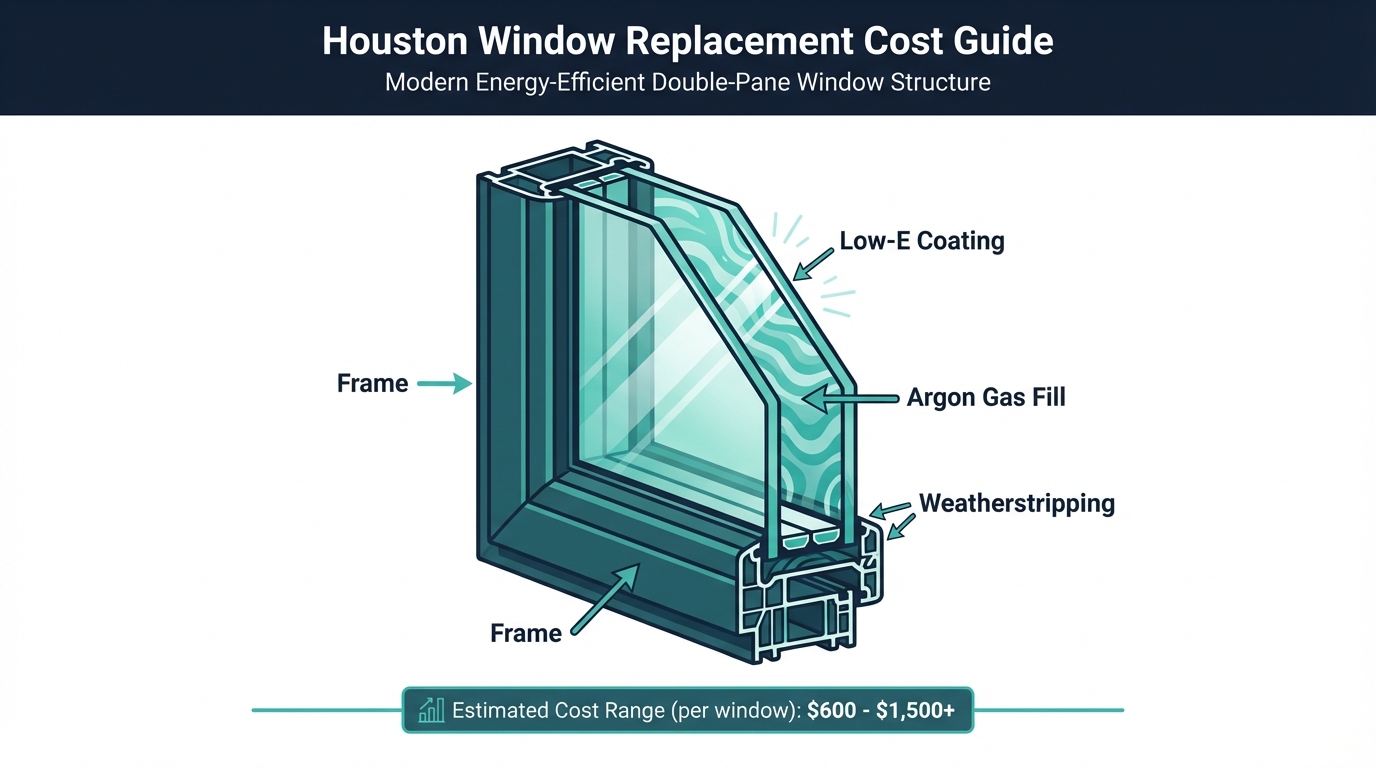
The main ratings to understand are:
- U-factor
- Solar Heat Gain Coefficient, or SHGC
- Visible Transmittance
- Air Leakage
- Condensation Resistance
You do not have to become a building scientist. But you should understand enough to compare quotes intelligently.
Houston Priority
SHGC: The Rating Houston Homeowners Should Watch Closest
SHGC stands for Solar Heat Gain Coefficient. It measures how much solar radiation gets through the window and becomes heat inside the home.
The Department of Energy explains that the lower the SHGC, the less solar heat the product transmits and the greater its shading ability. In hot climates, that matters.
In Houston, SHGC is often the comfort rating homeowners notice first.
Lower SHGC helps with:
- West-facing rooms
- Upstairs bedrooms
- Large picture windows
- Rooms with afternoon sun
- Hot glass surfaces
- AC run time during sunny days
- Fading near windows
Insulation
U-Factor: The Insulation Rating
U-factor measures how quickly non-solar heat flows through the window. Lower is better.
The DOE notes that NFRC U-factor ratings represent the whole window performance, including the frame and spacer material, not only the center of the glass. That is important because a window is more than the glass.
U-factor matters for:
- General insulation
- Winter comfort
- Heat transfer through the full window unit
- Comparing frame and glass packages
- ENERGY STAR certification
In Houston, U-factor still matters. But it should not distract from SHGC. A window can insulate well and still let too much solar heat into the room if the SHGC is too high.
That is why the best Houston window package usually needs both: a good U-factor and a low SHGC.
Side by Side
SHGC vs U-Factor: What Each Rating Tells You
Here is the practical difference:
| Rating | What It Measures | Houston Takeaway |
|---|---|---|
| SHGC | Solar heat entering through the window | Critical for sunny rooms and cooling comfort |
| U-factor | Non-solar heat transfer through the full window | Important for insulation and ENERGY STAR qualification |
| Visible Transmittance | How much daylight passes through | Helps compare brightness, tint, and glass feel |
| Air Leakage | Air passing through the product | Useful for draft control and install-quality conversations |
| Condensation Resistance | Resistance to interior condensation | Helpful, but less central than SHGC/U-factor for Houston heat |
If a salesperson can explain this table clearly, that is a good sign. If they only say "these are energy efficient" and cannot show you the ratings, slow down.
ENERGY STAR
What ENERGY STAR Means for Houston Windows
ENERGY STAR is a certification program, not a window type.
The ENERGY STAR residential windows guide says windows, doors, and skylights must meet U-factor and, where applicable, SHGC requirements based on climate zone. Current criteria were finalized in 2022, and new performance levels became effective October 23, 2023.
For homeowners, the practical move is simple: make sure the quoted window is certified for the climate zone that applies to your home.
ENERGY STAR also provides a climate zone finder so homeowners can confirm the appropriate zone by location.
Do not assume a window is right for Houston because it is efficient somewhere else. A product designed to collect winter solar heat in a cold climate may not be the product you want in a Houston room that bakes every afternoon.
Quote Comparison
How to Compare Two Window Quotes Using Ratings
When two quotes are far apart, the ratings often explain why.
Ask each company for:
- Product line and frame material
- Glass package name
- U-factor
- SHGC
- ENERGY STAR climate-zone certification
- Warranty terms for the insulated glass unit
- Installation scope and air-sealing details
Then compare the actual package, not just the bottom-line price.
A cheaper quote may be quoting clear double pane glass, a weaker spacer, a lower-grade frame, or a warranty with less coverage. A more expensive quote may include Low-E glass, better solar control, stronger warranty terms, and cleaner installation details.
For the bigger pricing context, use our guide to window replacement cost in Houston.
Common Mistakes
Common Mistakes Homeowners Make With Window Ratings
The first mistake is treating "double pane" as the whole answer. Double pane tells you the unit has two panes of glass. It does not tell you whether the glass blocks Houston solar heat well.
The second mistake is looking only at U-factor. U-factor is important, but in hot sunny rooms, SHGC often explains the comfort problem better.
The third mistake is assuming darker glass is automatically better. Tint can reduce glare and heat, but visible darkness is not the same thing as energy performance. Low-E coatings can reduce infrared heat while preserving more visible light.
The fourth mistake is comparing a brand name instead of the exact package. Most manufacturers offer multiple glass packages. The ratings tell you which one you are actually buying.
Allwin Advice
What We Recommend for Houston Homes
For most Houston homes, Allwin recommends:
- White vinyl-frame replacement windows for value and durability
- Double-pane insulated glass
- Low-E coating
- Low SHGC for solar heat control
- A U-factor appropriate for ENERGY STAR certification
- NFRC ratings available before you sign
- Clear warranty coverage for the insulated glass unit
This is not about chasing the lowest number in every category. It is about choosing the right balance for Houston: comfort, daylight, warranty, cost, and long-term performance.
Frequently Asked Questions
Q.What is SHGC on a window?
SHGC stands for Solar Heat Gain Coefficient. It measures how much solar heat passes through the window. Lower SHGC means less sun-driven heat enters the home, which is especially important for Houston rooms with direct sun.
Q.What is U-factor on a window?
U-factor measures how quickly non-solar heat flows through the whole window unit. Lower U-factor means better insulation. NFRC U-factor ratings include the frame and spacer, not only the glass.
Q.Which matters more in Houston, SHGC or U-factor?
Both matter, but SHGC is often more noticeable for Houston comfort because it controls solar heat gain. U-factor is still important for insulation and ENERGY STAR certification.
Q.What does ENERGY STAR certified mean for windows?
ENERGY STAR certified windows meet performance requirements for their climate zone. For Houston, homeowners should confirm the product is certified for the appropriate Southern climate zone rather than assuming every ENERGY STAR window is equally suited to Texas heat.
Q.Where do I find SHGC and U-factor?
Look for the NFRC label or ask the contractor for the NFRC ratings for the exact product being quoted. If a quote does not list SHGC or U-factor, ask for those numbers before comparing prices.
Q.Is visible transmittance important?
Yes, but it is secondary to SHGC and U-factor for most Houston replacement projects. Visible transmittance tells you how much daylight passes through the window, which helps compare brightness and tint.
Q.Can a cheap window still have good ratings?
Sometimes, but you need the exact ratings to know. Price alone does not tell you the glass package, frame quality, installation scope, or warranty coverage. Compare the NFRC label and the written quote together.
Get a Quote That Shows the Window Ratings
If you are comparing replacement windows in Houston, ask for the numbers before you choose the price.
Allwin installs energy-efficient replacement windows across Houston, Katy, Sugar Land, The Woodlands, Cypress, Spring, Pearland, Richmond, and the surrounding area.
Call (713) 636-5145 for a free in-home quote. We will explain the SHGC, U-factor, glass package, warranty, and installation details clearly before you decide.


