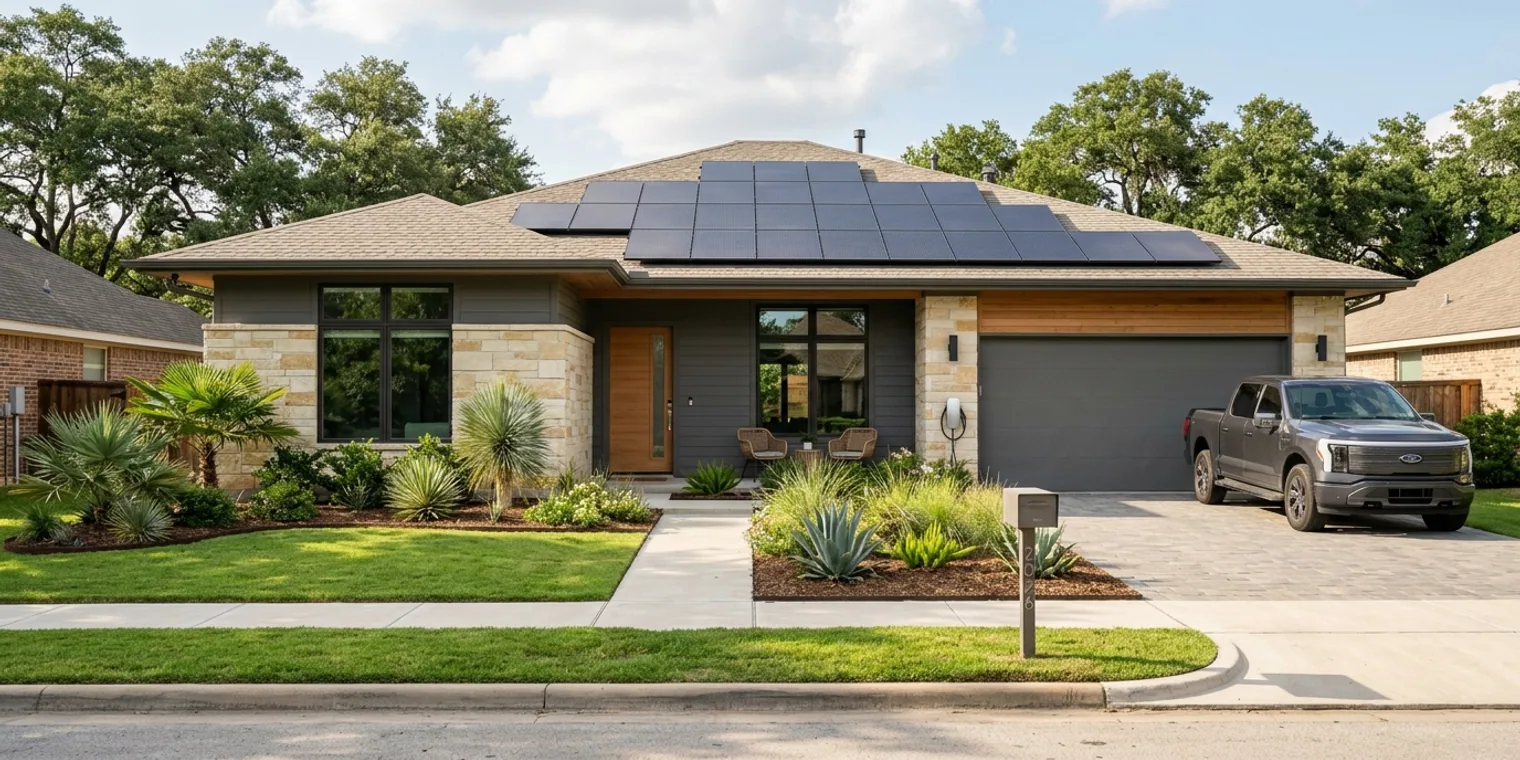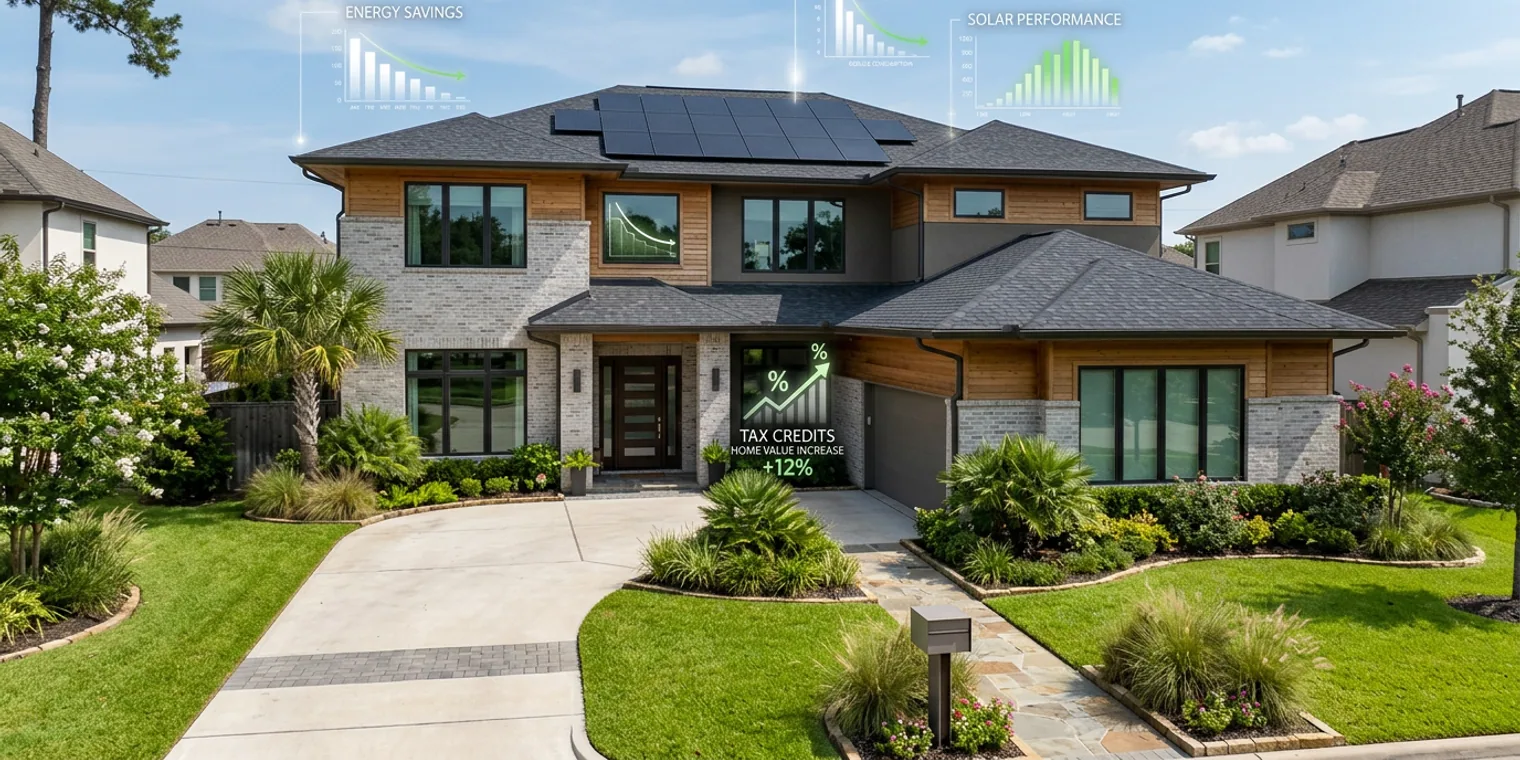

The short answer: the federal Energy Efficient Home Improvement Credit ended for property placed in service after December 31, 2025. A 2026 Houston project should be budgeted without that federal credit unless current IRS guidance for the specific improvement says otherwise.
Did the Federal Home-Efficiency Credit Continue Into 2026?
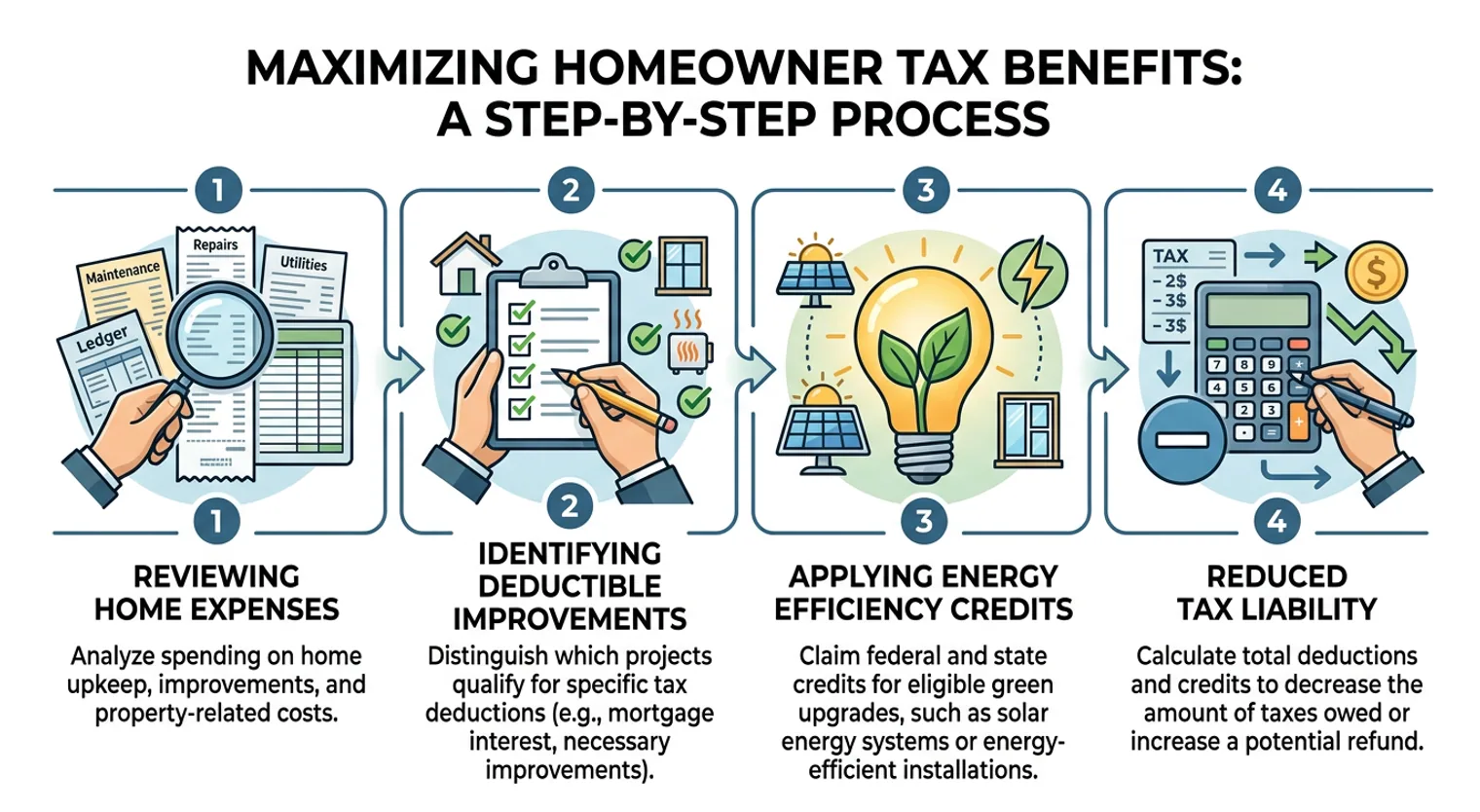
No. The IRS Energy Efficient Home Improvement Credit guidance says qualifying improvements could be claimed through December 31, 2025. That includes the former credit rules for qualifying exterior windows and skylights. ENERGY STAR certification still helps compare products in 2026, but certification does not itself create a federal tax credit.
If qualifying work was completed in 2025, keep the invoice, installation date, product identifiers, and manufacturer documentation for the 2025 return. For work completed in 2026, ask a qualified tax professional about any other provision that may apply rather than assuming the expired credit is available.
Check Utility and Manufacturer Programs Separately
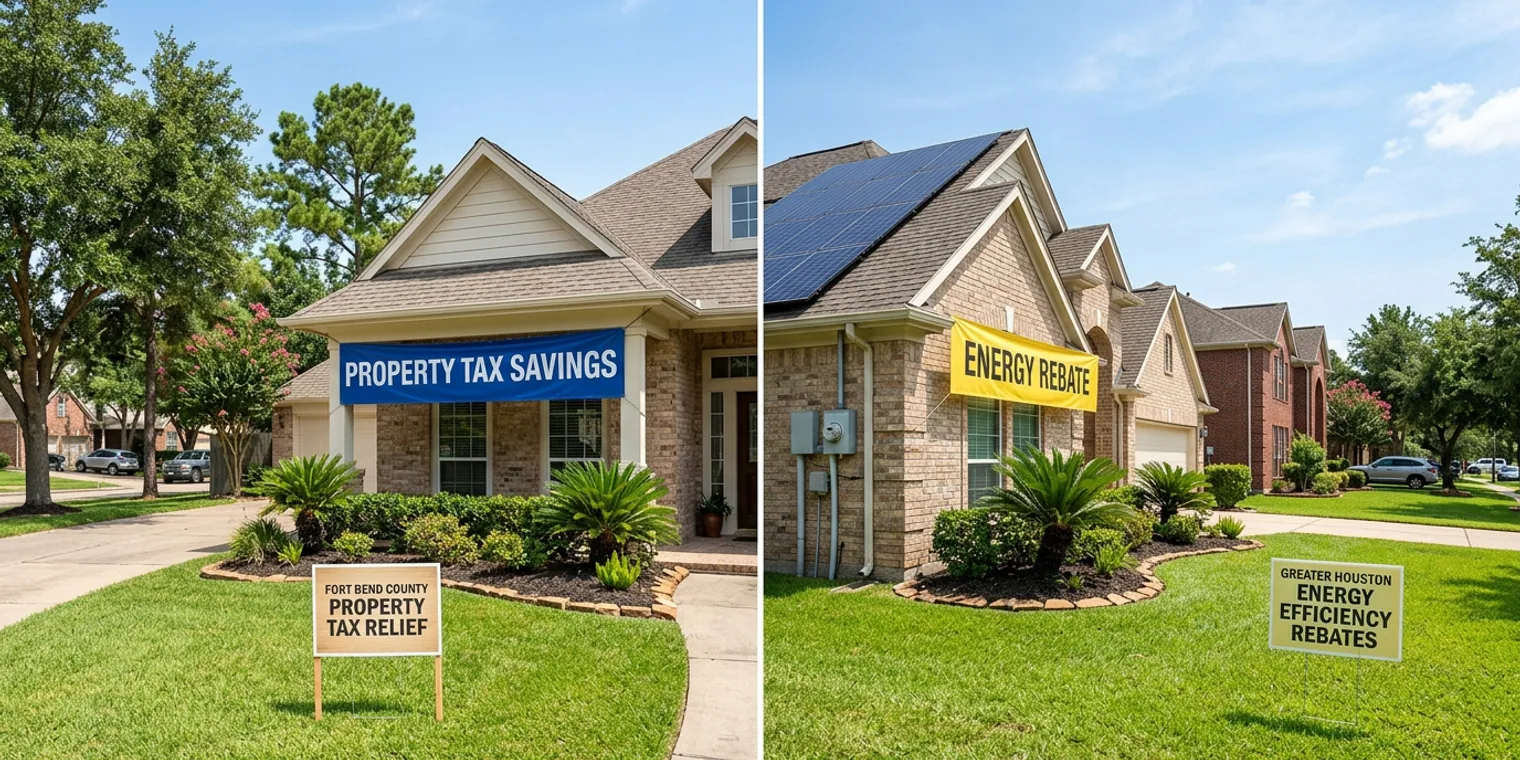
Utility rebates are not uniform across Greater Houston. Eligibility can depend on the customer's retail electric provider, transmission and distribution utility, equipment, contractor, and available program funding. Verify the current written terms directly with your provider before treating a rebate as part of the project budget. Manufacturer promotions are separate from government credits and may have their own deadlines and exclusions.
Energy Efficiency: Reduce Cooling Costs Naturally
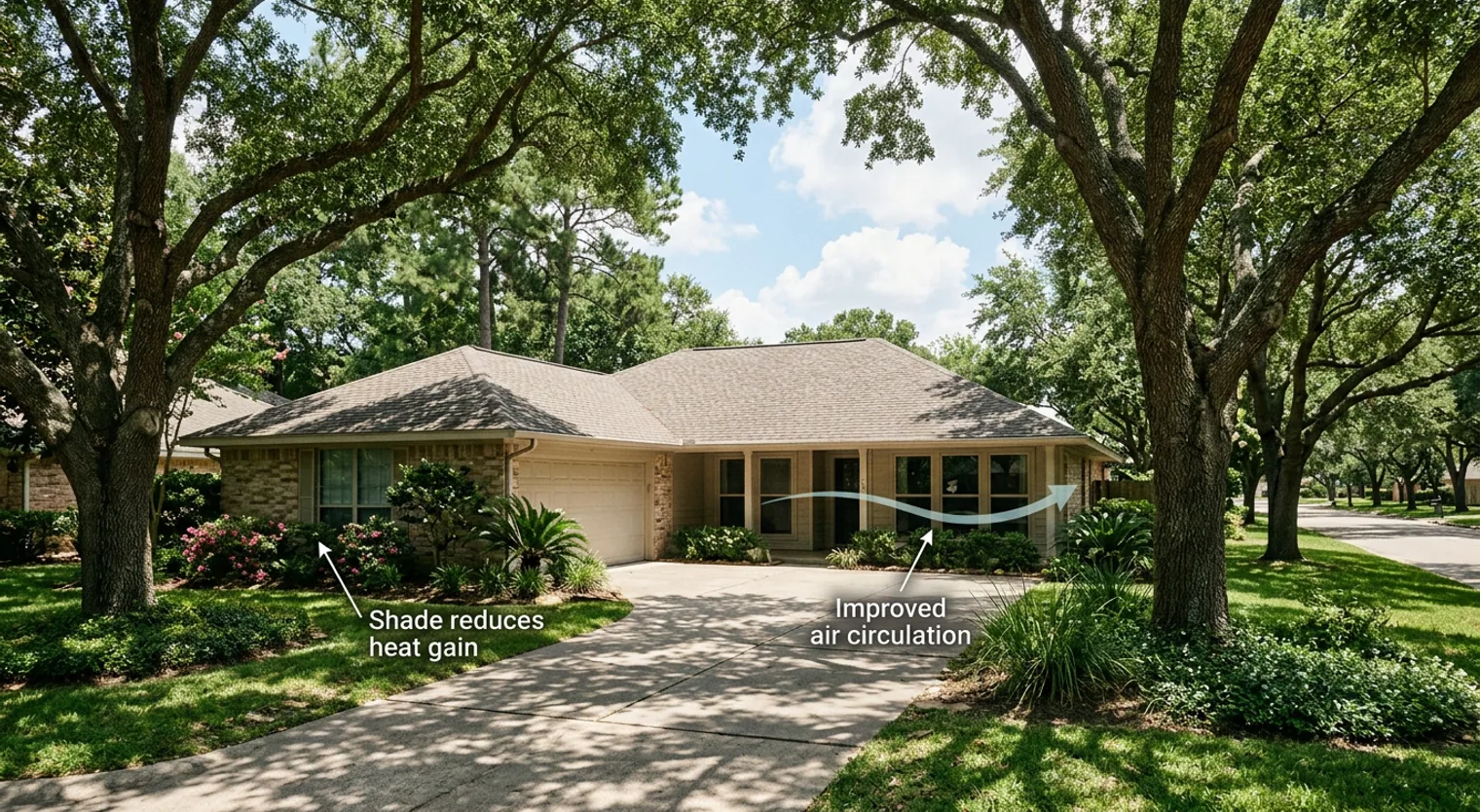
For Houston homeowners facing high cooling demand, exterior shade can reduce direct solar gain through windows and walls. The Department of Energy's landscaping guidance recommends carefully positioned trees and other landscape strategies, but results depend on orientation, species, growth, distance from the structure, and maintenance. Avoid roots or branches that threaten foundations, roofs, utility lines, or drainage.
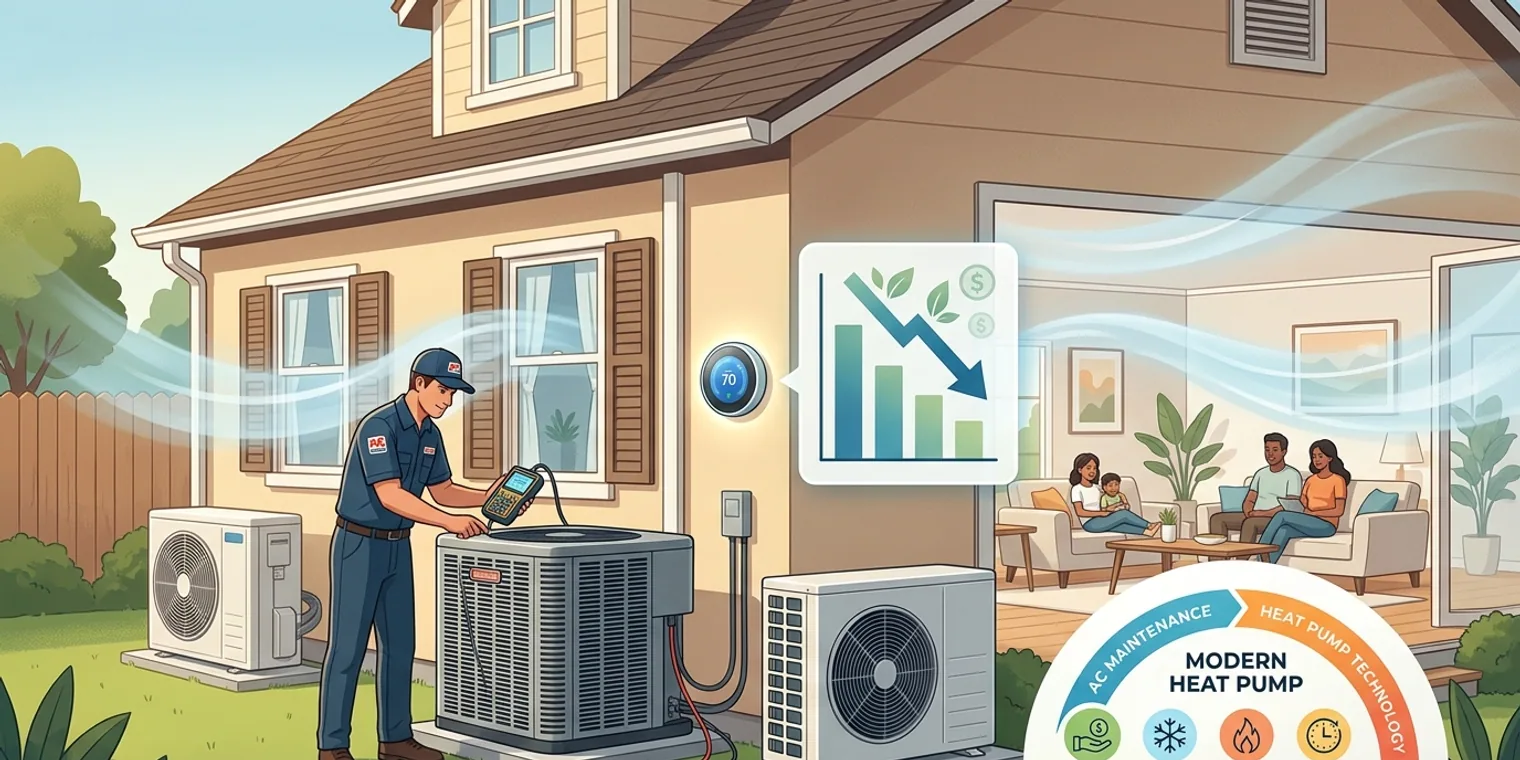
Also compare air sealing, attic insulation, HVAC maintenance, duct condition, and window performance. For windows, use the NFRC label to compare whole-window SHGC and U-factor for the exact product. Houston is in ENERGY STAR's Southern climate zone; a lower SHGC admits less solar heat, but visible light, shading, orientation, and installation quality still matter.
A Practical 2026 Checklist
- Confirm the installation year before applying any federal tax rule.
- Read current IRS guidance and keep product and payment records.
- Check your own utility provider's written rebate terms.
- Compare project cost without assuming an incentive.
- Ask for NFRC ratings and an itemized installation scope.
- Estimate savings conservatively for the specific home.
Tax rules and incentive programs change. Verify them at the time of purchase and consult a qualified tax professional for advice about your return.
Frequently Asked Questions
Q.Is there a federal tax credit for energy-efficient windows installed in 2026?
Current IRS guidance says the Energy Efficient Home Improvement Credit applies to qualifying improvements made through December 31, 2025, not property placed in service in 2026.
Q.Can Houston homeowners still get utility rebates in 2026?
Possibly, but programs vary by electric provider, equipment, funding, and installation date. Check your own provider's current program before signing a contract.
Q.Which upgrades can reduce Houston cooling demand?
Start with air sealing, insulation, HVAC maintenance, solar-control window ratings, and exterior shading, then compare modeled savings and installed costs for your specific home.